
Paving installation is the actual construction work: excavation, base preparation, laying and jointing. That turns pavers into a driveway, path, patio or courtyard you can actually walk, sit and drive on. If you've already picked a paver and just need it installed properly, or you haven't chosen one yet and want advice on what suits your site, this is the difference between a paving contractor and a paver showroom: we do the installation, not just sell you the material.
Martyn Hand has been laying paving in Adelaide gardens since 1981, holds Builders Licence BLD 51302, and quotes and builds every job personally with a small handpicked team. Most of our paving is part of a bigger garden job: under a verandah, around a pool, or a path through the garden in place of plain grey concrete.
Recent Paving Jobs
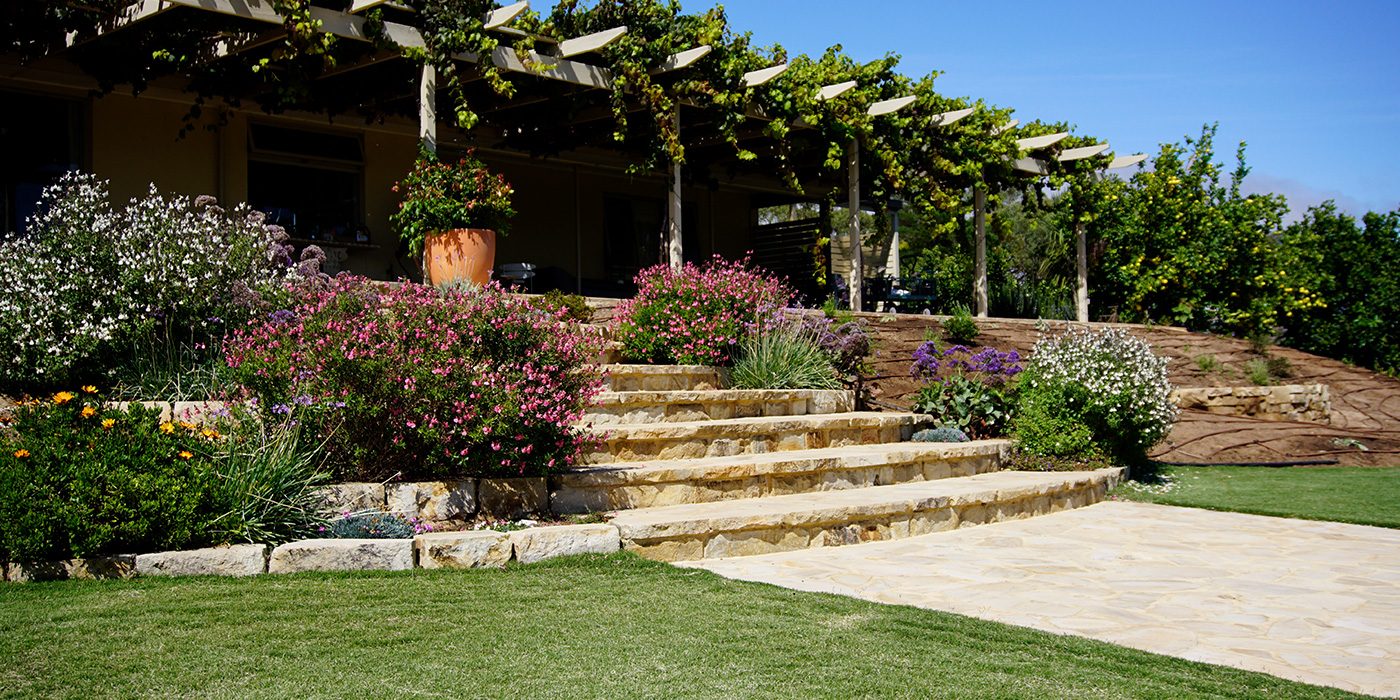
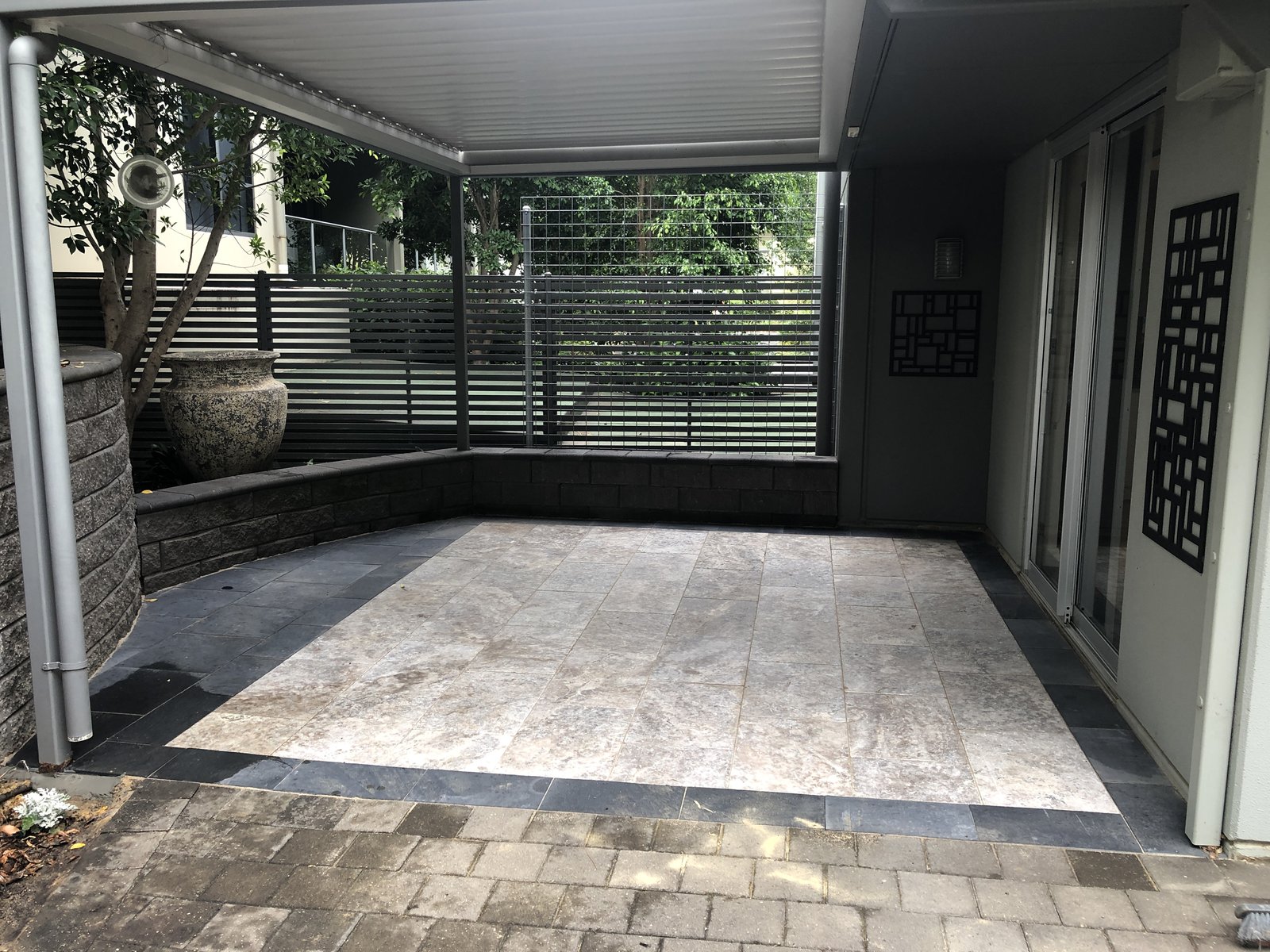
Willunga South, sandstone on reactive clay. The old pavers under the verandah were lifted and 400mm x 400mm Coastal pavers relaid on a 75mm compacted rubble base. The site sits on highly reactive Bay of Biscay soil, so every wet-laid Basket Range sandstone area went down on 100mm of cement-treated rubble over geofabric, to limit movement and stop the mortar joints cracking. The sandstone path around the Weeping Mulberry was laid on a mortar base and jointed with colour-matched cementitious grout. See the full case study →
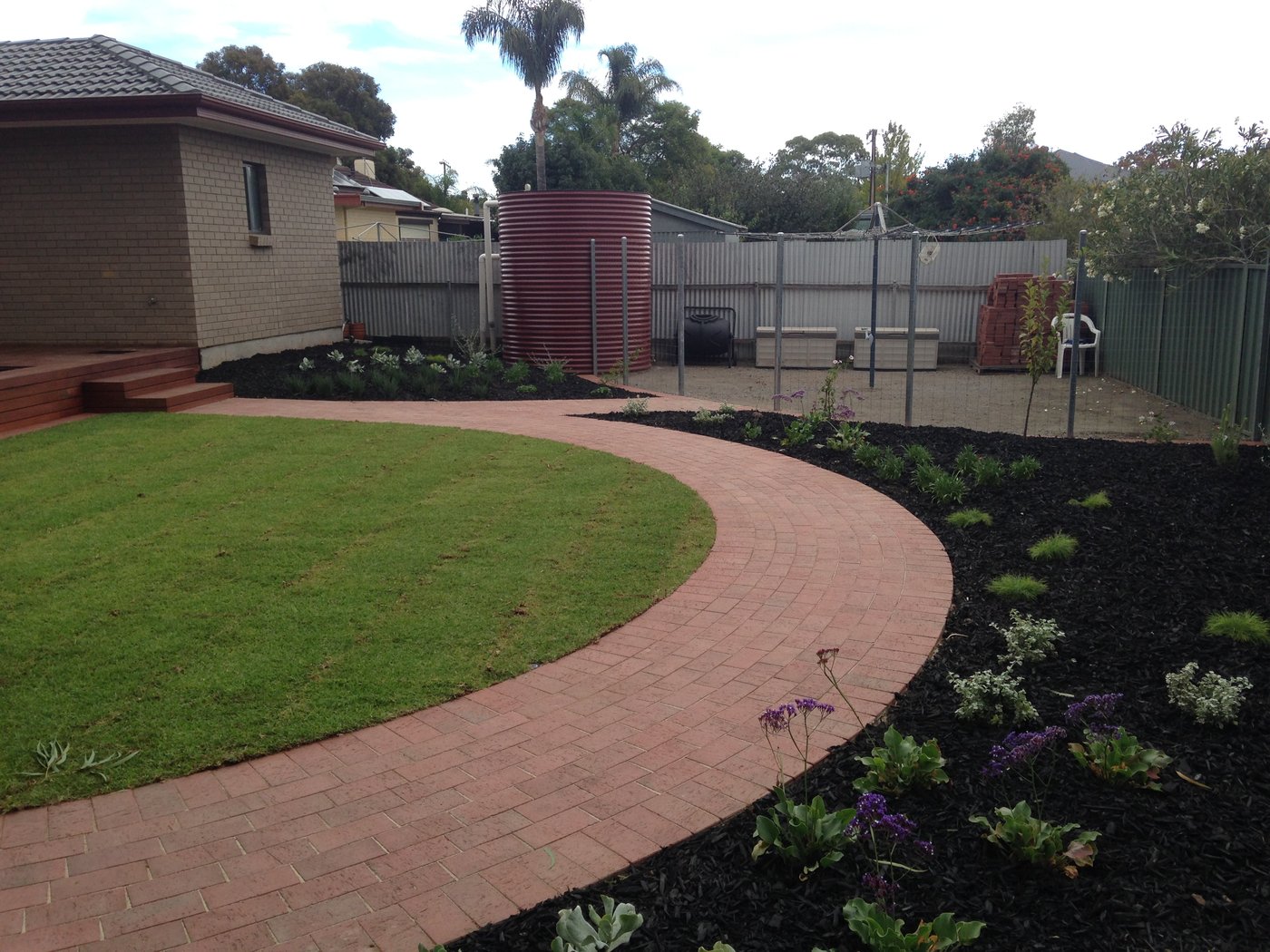
Oaklands Park, a brick path between lawn and garden beds. A quarry rubble base, compacted and topped with concrete sand, then red brick pavers with concrete haunching set along both sides to stop the edges creeping into the softer lawn and beds. Pave-lok was swept into the joints after a final compaction and set with water. See the full case study →
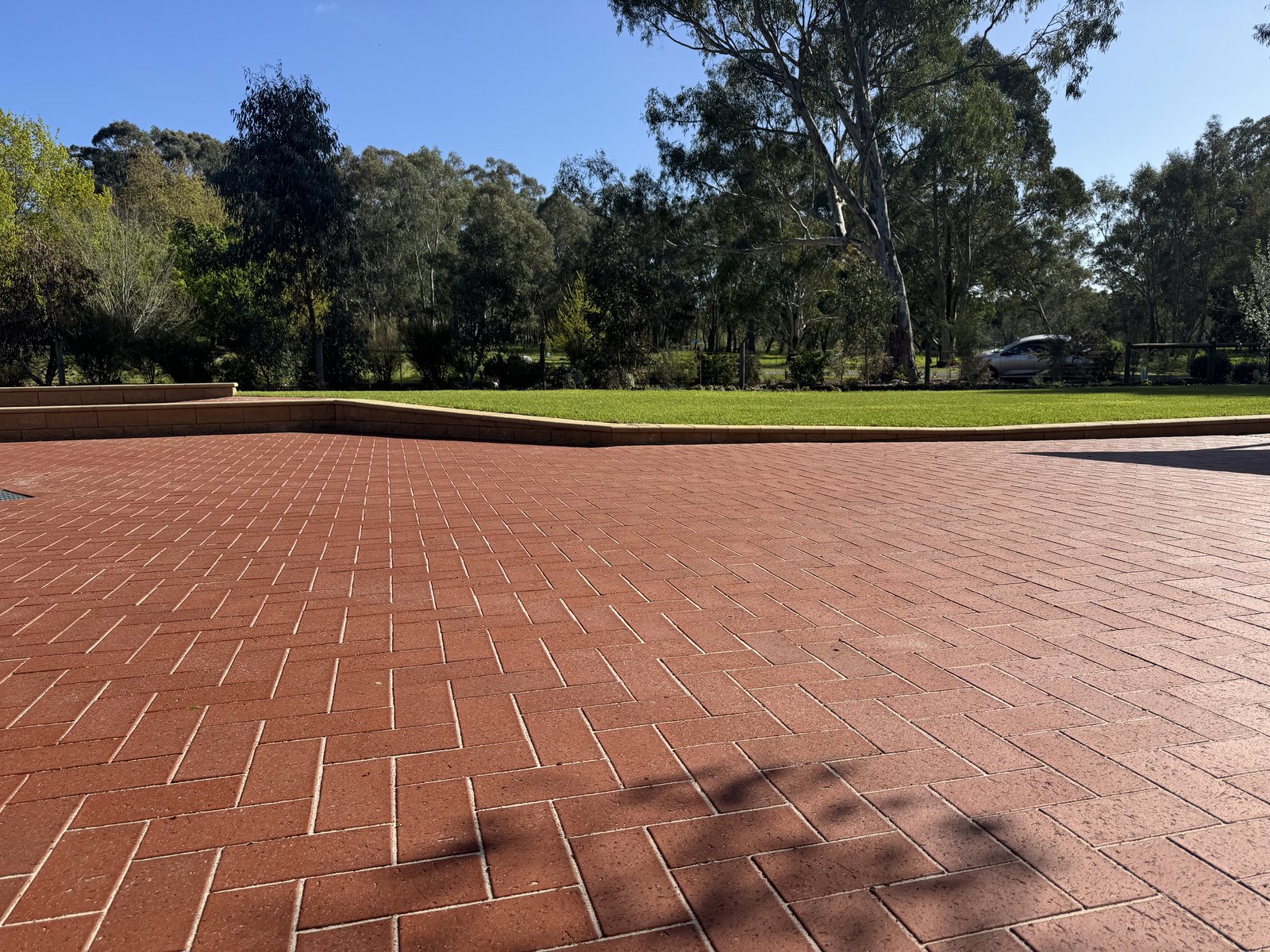
Verdun, herringbone brick across a large area. Herringbone sets pavers at 45 or 90 degrees in an interlocking zigzag that locks together under vehicle weight better than any other pattern, which is why it's the standard for driveways. Stretcher bond (simple offset rows) is the most economical choice for paths and driveways, and basketweave or stack bond suit paths and courtyards where a clean, formal look matters more than load-locking strength.
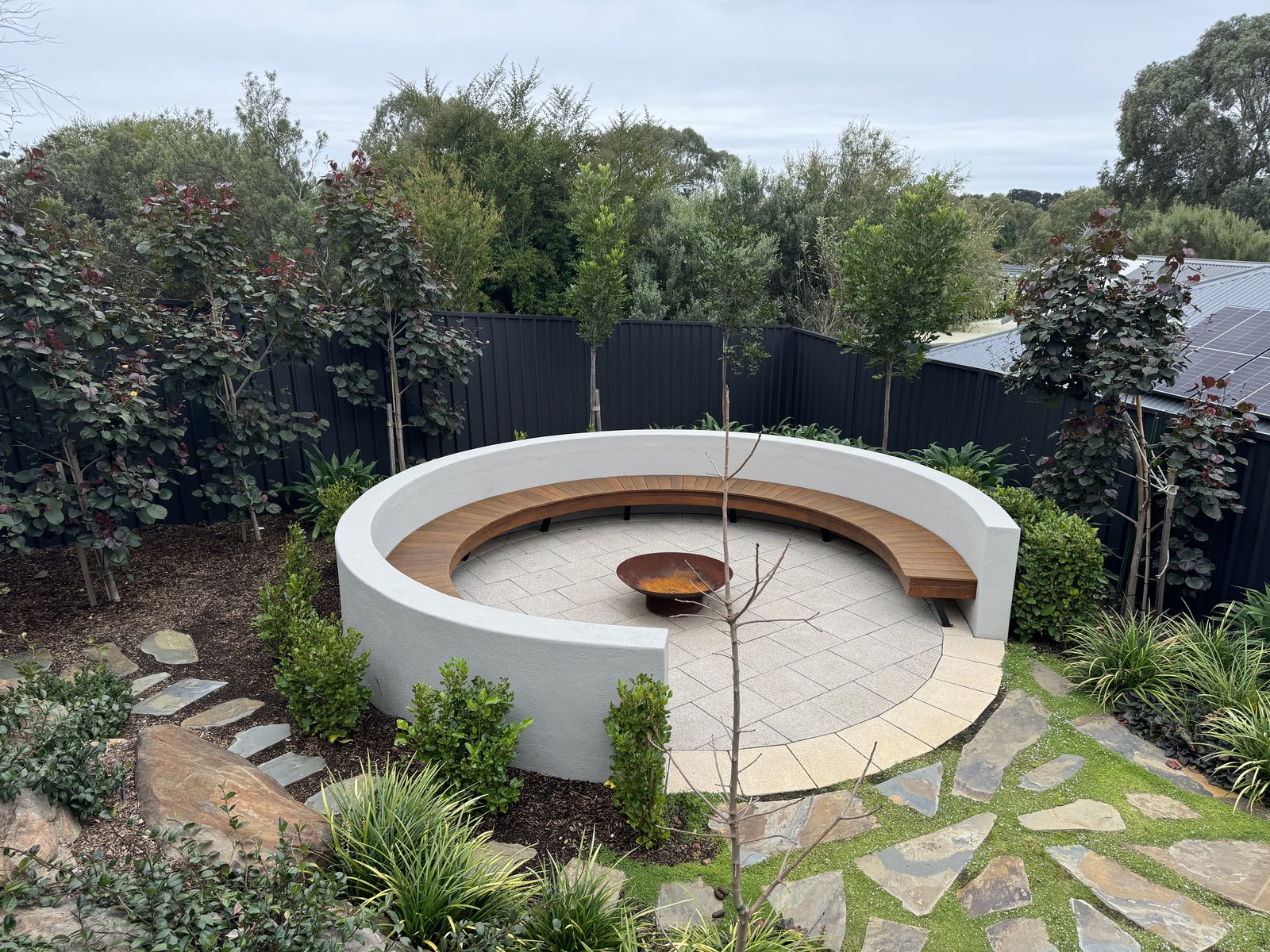
Aberfoyle Park, radial paving in a small courtyard. Large, simple segments laid radially around the firepit, so the circular shape reads clearly instead of getting lost in a fussy small-unit pattern. More on how paver size and pattern change at a small scale in our small courtyard paving ideas.
Size, Sealing and Cost
The paver's size, thickness and texture come down to the traffic it will carry and where it's laid. For driveways, clay brick or a thick textured concrete paver handles cars and trucks turning on it. Large format natural stone suits verandahs and pool surrounds if the budget allows.
Whether to seal depends on the paver and the spot. A patio or entertaining area usually benefits from sealing: leaves, dirt, bird droppings (which are surprisingly acidic), pool chlorine, barbecue fat and red wine can all leave permanent stains, especially after rain. A driveway generally doesn't need it.
Budget and area have the biggest effect on the price, so it helps to know roughly what you're comfortable spending before you start. As a guide, 30 square metres of basic paving typically starts from around $5,000, and 30 square metres of natural stone runs to around $13,000 (both incl. GST).
How Paving Installation Actually Works
Excavation comes first. The area is dug out to the right depth for the base and paver thickness combined, typically 100–150mm total for a path or patio, more for a driveway carrying vehicle weight. Getting this depth right before anything else happens is what stops the finished surface sitting too high or too low against a doorway, existing path or garden edge.
Base compaction is the step most DIY paving jobs get wrong, and it's the one that actually determines whether a job lasts. Road base or crushed rock goes down in layers, each one compacted with a plate compactor before the next goes on top: compacting the whole depth in one pass leaves the bottom loose no matter how solid the top looks. A bedding layer of coarse washed sand goes over the compacted base, screeded level, for the pavers to sit into.
Edge restraints (concrete, steel or timber edging pinned or set along the perimeter) stop the whole job creeping outward under foot or vehicle traffic over time. Skipping them is a common corner-cut that shows up as spreading joints and a wandering edge line within a year or two.
Pavers are laid to the chosen pattern, cut to fit edges and around obstacles with a wet saw for a clean line rather than forced or chipped pieces, then compacted into the sand bed with a plate compactor fitted with a protective pad so it doesn't chip or polish the paver faces. Jointing sand goes in last, swept into the gaps and compacted in, sometimes followed by a sealer depending on paver type. This is what locks the whole surface together as one interlocking unit rather than a collection of loose tiles.
Choosing Between Paver Types
Concrete, clay brick and natural stone (sandstone, travertine, granite) each behave differently underfoot, in the sun, and over the years. The right choice depends on budget, the look you're after and how the area's actually used, not just which one looks best in a supplier's brochure. See our full sandstone versus concrete pavers comparison for cost, durability, heat and maintenance if you're still deciding.
Paving a small courtyard or side garden comes with its own decisions. Paver size and pattern read very differently at a small scale than across a big driveway. See our small courtyard paving ideas for real examples.
It's also worth planning the overall landscape design first, so the paving ties into paths, beds and the rest of the layout rather than being an afterthought.
What Clients Say
Martyn and his team were amazing. Always on time, very clean and extremely approachable. They were happy to explain things along the way and nothing was too much trouble.
Jodie Ielasi, Google review
Where We Lay Paving
We're based in McLaren Vale and pave across Adelaide's southern suburbs, eastern suburbs and western suburbs, as well as McLaren Vale itself. Ground conditions change a lot across that area, from sandy coastal soil to the reactive clay of the foothills, and the base is prepared to suit.
Paving FAQ
What's the difference between paving and concreting?
Paving uses individual pavers laid over a compacted base, so it flexes slightly with minor ground movement and individual pavers can be lifted and reset if needed. Concrete is one continuous poured slab: harder to repair in sections if it ever cracks.
Do I need council approval to lay a paved path or patio?
Generally no for a standard ground-level path or patio: it's not something most councils regulate unless it affects stormwater drainage or is part of a larger development. Worth checking for your specific council if in doubt.
How much does paving cost in Adelaide?
It depends on paver choice, base preparation and site access, so it's quoted individually, but as a guide, 30 square metres of basic paving typically starts from around $5,000, while 30 square metres of natural stone paving typically runs to around $13,000 (both incl. GST). A free on-site quote gives you a real number for your project.
What paver materials are available?
Concrete, clay brick and natural stone pavers, chosen to suit your budget and the existing look of the garden.
Can pavers be used for a driveway?
Yes. Clay brick and thick textured concrete pavers are strong enough for regular car and truck traffic and are a popular driveway choice. A driveway needs a more heavily compacted base than a path or patio to handle the extra weight, which is factored into the quote.
How long does paving last?
A properly prepared base determines lifespan more than the paver material itself: done right, paving lasts decades with little more than an occasional re-sand of the joints.
Would you like an area paved? If you know what your budget is and have something in mind, ask us to quote on it.
Book a Site Consultation