
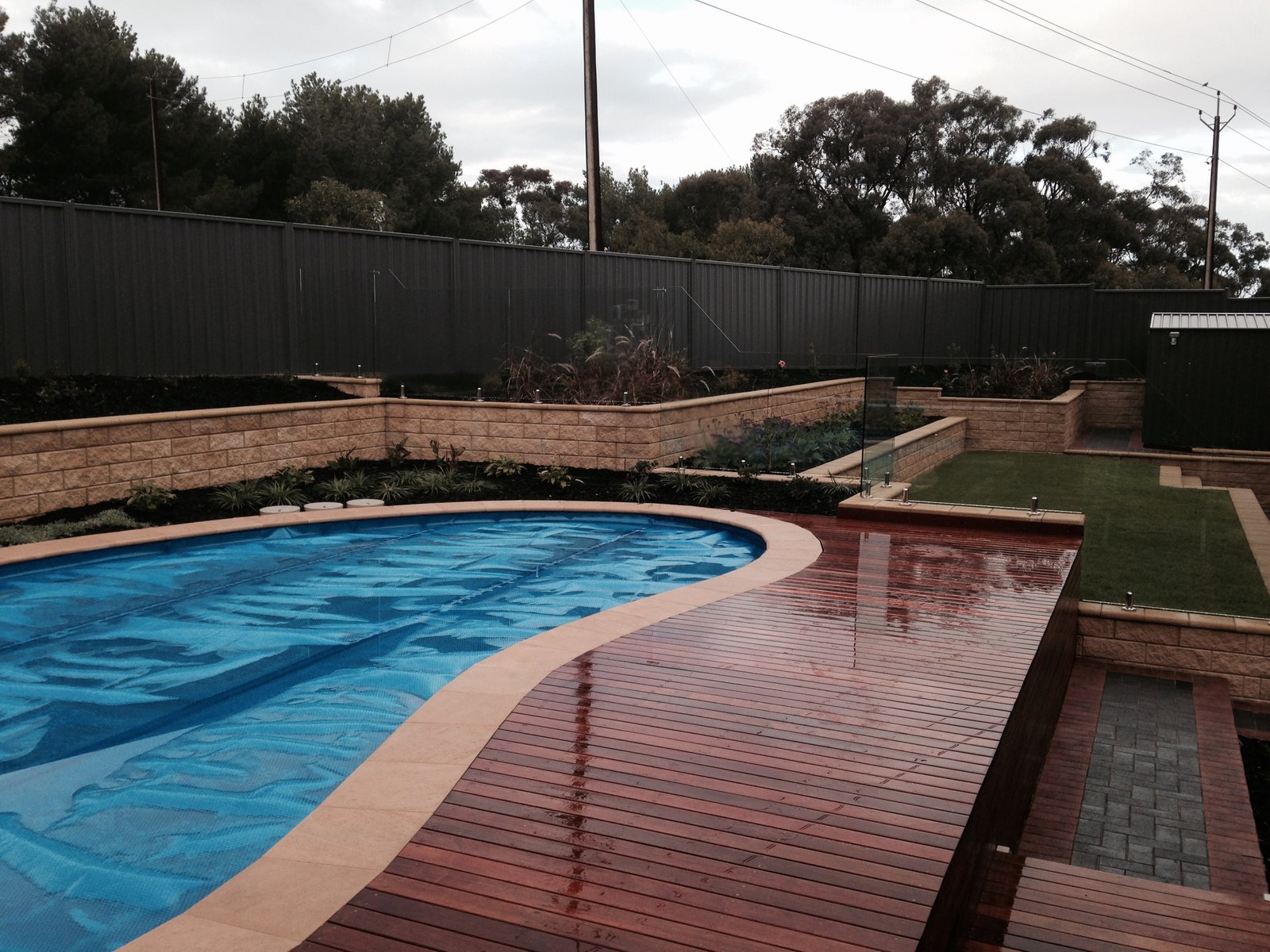
A retaining wall is a structure built to hold back a difference in ground level, turning a sloped or awkward section of yard into a flat, usable space for a lawn, garden bed, shed or deck.
If you have a front garden or backyard with a severe slope, chances are much of the space isn't being used or utilised as well as it could be. Creating a split, with two or more level areas, can make the land more useable and practical. Depending on how high the wall is, steps are often incorporated to allow quick and easy access to all parts of your garden.
Retaining walls and landscaping go hand in hand when tackling a sloping block. With over 45 years experience, Hand Made Gardens can advise what type of retaining wall would work best, taking your unique situation into account. When changing the landscape of your garden there will always be consequences to consider. Often neglected to be mentioned by many landscapers is what the impact will be when it rains: stormwater pipes and grates often need to be laid to cater for increased water build-up in certain areas, and depending on the height and construction material used, an agricultural drain may be required by engineers to keep as much water as possible away from the wall too.
Getting the footing right is what actually determines whether a wall stays put. On a Glen Osmond retaining wall, a 150mm deep compacted rubble base was laid and levelled off with a sand and cement screed to form the footing, with the blocks laid on top and the voids between them filled with 14mm gravel. Behind the wall, plastic, geofabric and a slot drain went in before backfilling: that's the actual drainage work referred to above, giving water somewhere to go instead of building up pressure behind the wall.
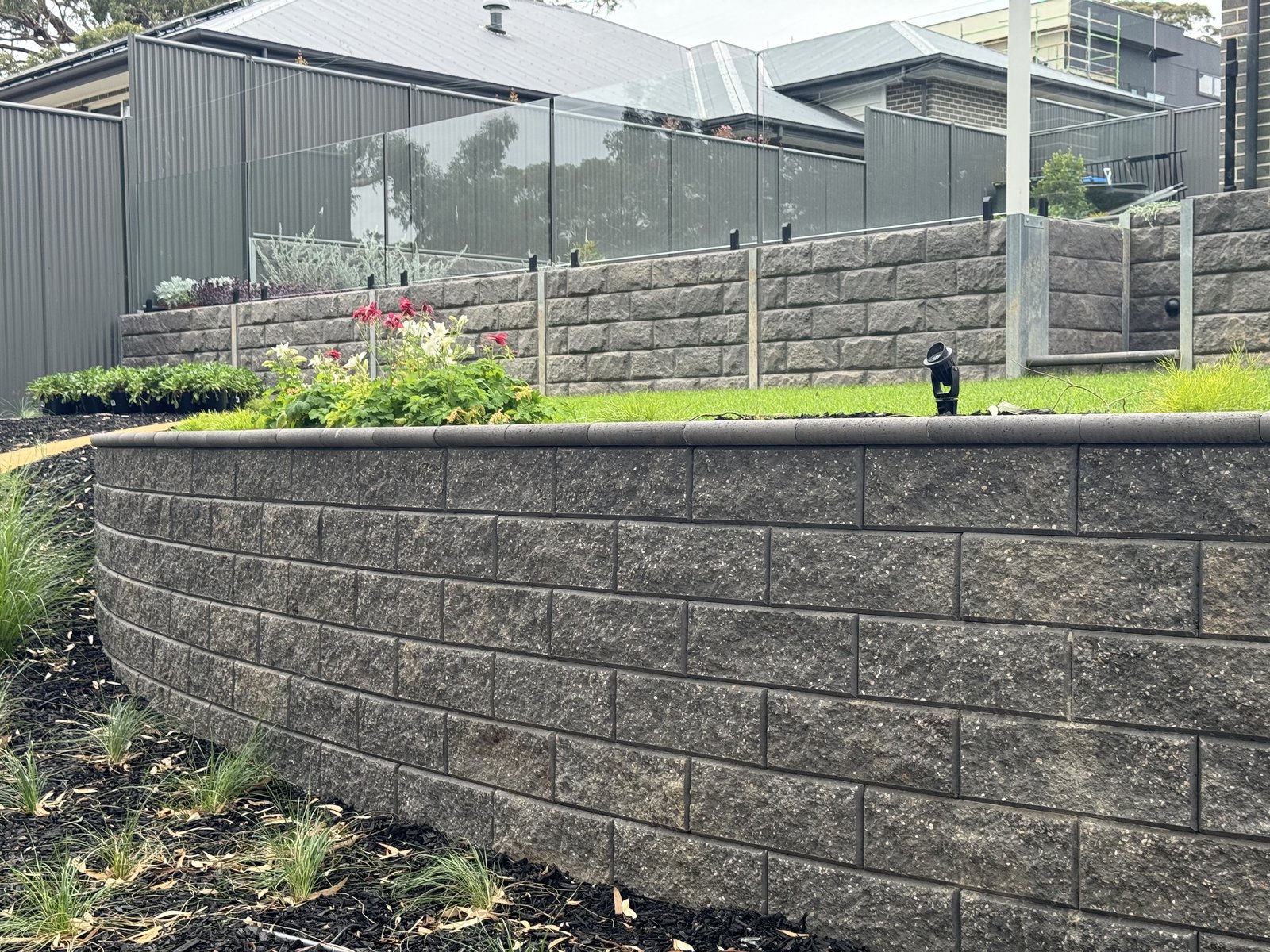
The choice of retaining walls Adelaide home owners can select from is large. The style and look you currently have, or want to achieve with your new garden, will help you decide what material your retaining wall will be made with. Concrete blocks are one of the most popular choices, used when a more formal look is required: with many colours to choose from, they also come with matching coping and pavers. Stone or rock walls are selected by many residents across Adelaide's southern suburbs looking for a less formal, modern look to complement their country or cottage style garden.
Construction method varies by material as much as look. A dry-stacked stone wall (like the Basket Range sandstone retaining wall built for a Willunga winery) sits on a concrete footing without mortar between the stones, giving a more natural finish, and gets waterproofed with a membrane to stop water seeping into the stone itself. Concrete block walls, by contrast, get matching capping fixed on with external-grade construction adhesive for a cleaner, more formal line.
Raised garden beds also retain earth. Light weight Hebel blocks can be rendered, then painted to match the surrounding areas' colour scheme.
A retaining wall is often just one part of tackling a sloping block: see our Glen Osmond job, where a wall and curved steps were built alongside a timber deck over the same slope, or read about the site prep and drainage work that usually happens behind the wall before it's built.
Retaining Walls FAQ
Do I need council approval for a retaining wall in South Australia?
Generally not if the wall retains 1.0m or less of ground-level difference and sits at least 1.0m from a property boundary. Taller walls, walls closer to a boundary, or a structure built on top (like a driveway or deck) need Development Approval from your council, and some councils/zones apply stricter rules regardless of height, so it's worth checking for your specific site.
What materials are retaining walls built from?
Concrete sleepers, concrete block, or natural stone. The right choice depends on the height of the wall, the look you want, and budget.
What happens if a retaining wall doesn't have proper drainage?
Water builds up behind the wall instead of draining away, which is the single biggest cause of retaining wall failure: it adds pressure the wall isn't designed for and can cause it to lean or collapse over time.
How much does a retaining wall cost?
Height, material and site access all affect the price, so every wall is quoted individually, but as a guide, a 10 metre long by 1 metre high wall typically runs from around $6,500 for concrete sleepers, $7,500 for retaining block, up to $11,500 for dry-laid stone (all figures incl. GST). Our retaining wall cost guide gives prices per square metre and what pushes them up, and a free on-site quote gives you a real number for your project.
Can a retaining wall include steps or seating?
Yes. Stonework, feature cladding and built-in seating or steps are common additions alongside the wall itself.
Would you like a split level garden? If you know what your budget is and have something in mind, ask us to quote on it.
Book a Site Consultation