
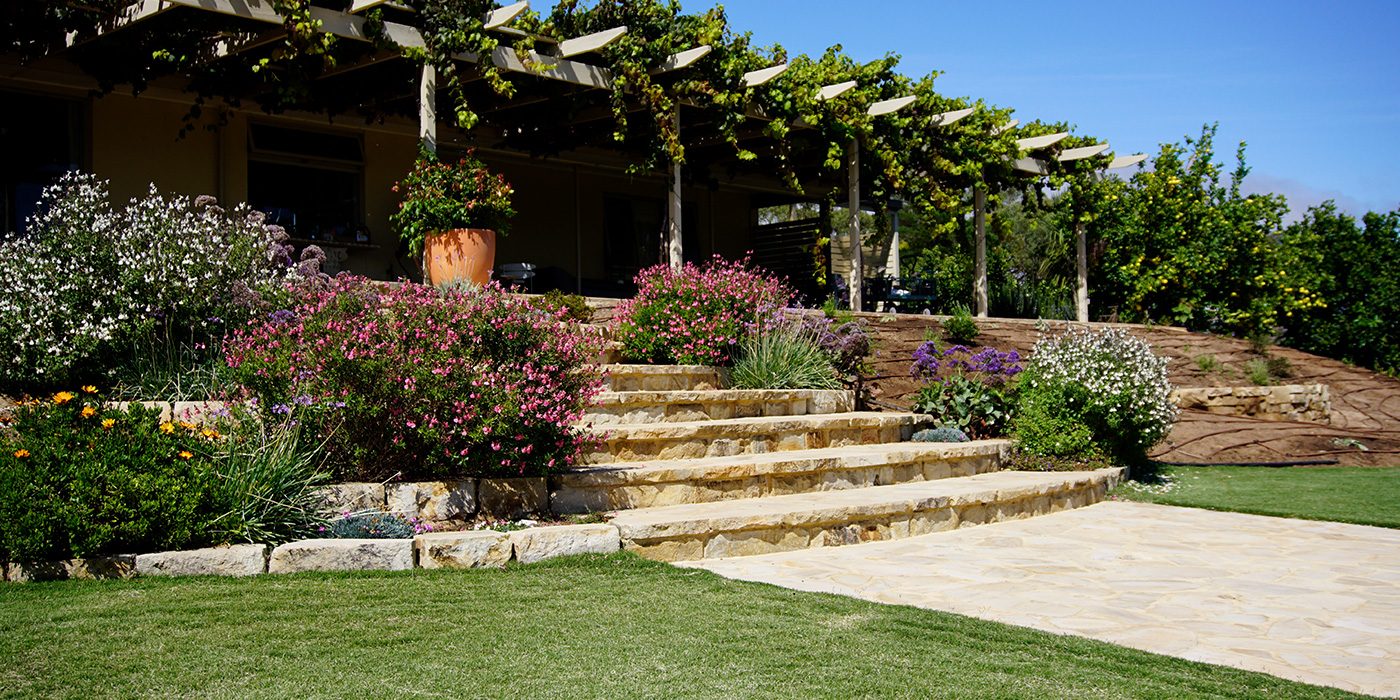
Both sandstone and concrete pavers turn up across our own jobs, and both are genuinely good choices. The right one depends on budget, how the area's used, and how much natural variation you want underfoot rather than one being straightforwardly "better." This covers the real differences that actually matter once installation's underway, not just how each looks in a supplier's display yard.
Cost
Concrete pavers cost less, in both material and labour. As a guide, 30 square metres of basic paving typically starts from around $5,000, against around $13,000 for the same area in natural stone (both incl. GST): see our full paving installation page for how that breaks down. Sandstone is quarried and cut to size rather than mass-manufactured, which is most of the cost gap; it's also generally slower to lay, since natural stone pieces vary slightly in thickness and need more individual attention at each joint than a uniform concrete unit.
Durability
Both last decades on a properly prepared base. The base matters more to lifespan than either material choice, which is why our own paving work always starts there regardless of what's going on top. Where they differ: sandstone, being a natural sedimentary rock, can chip or flake ("spall") at exposed edges over many years, especially where cheaper feature stone was used rather than a proper flagging-grade sandstone. Concrete pavers don't spall the same way, but can develop hairline cracks under a heavy, concentrated point load (a caravan jack, a heavy pot dragged rather than lifted) and are more prone to efflorescence (a white, powdery mineral bloom that can appear on the surface as the concrete cures and moisture moves through it). Neither issue is a dealbreaker on a well-built job; both are worth knowing about before you choose.
Heat Underfoot
Colour matters more than material here. A light sandstone and a light concrete paver both stay far cooler in direct sun than a dark paver of either type. This is genuinely one of the more important practical calls for an Adelaide summer, especially around a pool. Sandstone's naturally textured, slightly uneven surface also tends to feel less scorching underfoot than a smooth, dark concrete paver sitting at the same actual temperature, simply because less skin contacts the hottest point at once.
Appearance
Sandstone is quarried, so no two pieces are identical: natural colour variation, veining and texture that a lot of people specifically want for a less manufactured, more organic look, as in the Basket Range sandstone pictured above. Concrete pavers are manufactured to a consistent colour, size and finish, which suits a cleaner, more formal or contemporary design, and comes in a far wider range of colours and surface finishes (smooth, exposed aggregate, tumbled) than natural stone typically offers, since pigment can be added at manufacture rather than relying on what a particular quarry produces.
Maintenance
Sandstone is more porous than concrete and benefits from sealing more than concrete does. Left unsealed, it stains from dirt, leaves, oils and, around a pool, chlorine, especially once it's rained. Concrete pavers are less porous but not maintenance-free: they can fade with UV exposure over the years and are the material more likely to develop efflorescence, which is treatable but is a real cosmetic issue worth knowing about upfront rather than discovering after the job's done.
At a glance:
- Cost: concrete pavers cheaper in both material and labour; sandstone costs more to quarry, cut and lay.
- Durability: both last decades on a properly prepared base; sandstone can chip or flake at exposed edges, concrete can hairline-crack under a heavy point load and is more prone to efflorescence.
- Heat underfoot: colour matters more than material: light pavers of either type stay far cooler than dark ones in direct sun.
- Appearance: sandstone gives natural colour and texture variation; concrete gives a consistent finish in a wider range of colours and surface styles.
- Maintenance: sandstone benefits from sealing to avoid staining; concrete is less porous but can fade with UV and is more prone to efflorescence.
Which One Should You Choose?
Cost-sensitive areas that take real punishment (driveways, high-traffic paths, larger areas where covering 60-100 square metres in natural stone would blow most budgets) usually make more sense in concrete or clay brick. Smaller, feature areas where appearance carries real weight (an entertaining patio, a courtyard, steps and garden features people actually stop and look at) are where natural stone earns its higher cost, which is exactly why sandstone was the choice for the winery job pictured on this page. Mixing both on the same property, a concrete driveway with a sandstone patio, tied together with a shared edging material, is a common and sensible way to get both without the whole property being priced in natural stone.
If you're paving a smaller space specifically, see our small courtyard paving ideas for pattern and material choices that work at that scale.
Sandstone vs Concrete Pavers FAQ
Is sandstone or concrete cheaper for paving in Adelaide?
Concrete pavers are cheaper: as a guide, 30 square metres of basic concrete paving typically starts from around $5,000, against around $13,000 for the same area in natural stone (both incl. GST). Sandstone costs more for the material itself and is generally slower to lay.
Which lasts longer, sandstone or concrete pavers?
Both last decades on a properly prepared base, which matters more than the material itself. Sandstone can chip at exposed edges over time; concrete pavers can develop hairline cracks under heavy point loads and are more prone to efflorescence (a white mineral bloom). Neither is a durability dealbreaker if the base and jointing are done right.
Does sandstone or concrete get hotter underfoot?
Colour matters more than material: a light sandstone or a light concrete paver both stay far cooler in direct sun than a dark paver of either type. Sandstone's natural surface texture also tends to feel less scorching than a smooth, dark concrete paver at the same temperature.
Do sandstone pavers need sealing?
Yes, more so than concrete. Sandstone is a naturally porous sedimentary rock and will stain from dirt, leaves, oils and (around a pool) chlorine if left unsealed. Concrete pavers are less porous but still benefit from sealing to resist fading and efflorescence.
Can sandstone and concrete pavers be mixed on the same job?
Yes. A common approach is a concrete or clay brick driveway (strength and cost) paired with a natural stone patio or entertaining area (appearance), tied together with a shared edging or border material rather than a hard material change underfoot.
See our paving installation page for the full process, or the real Basket Range sandstone job this page's photo comes from.
General information only. Every site is different, so get advice for yours before you start work. Prices are a guide only, as at the date published. See our disclaimer.
Not sure which paver suits your project? Tell us what you have in mind and we'll help you choose.
Book a Site Consultation