As a guide, paving cost in Adelaide is about $170 to $430 per square metre, including GST. Most of that difference comes from the paver. For an area of 30 square metres, a patio or a decent path, basic concrete pavers start from around $5,000 and natural stone runs to around $13,000.
Those figures assume a site with reasonable access and ground that doesn't need much work. Every job is still quoted on its own, because the base, the soil and the access can move the price a long way. The rest of this guide covers what moves it, using paving we've laid.
Paving Cost per Square Metre
The per square metre figures come from that same 30 square metre area. Use them as a starting point, not a calculator. A smaller area costs more per square metre, because the setup, the digging and the base work don't shrink in step with it.
| Paver | 30 m² area | Per m² |
|---|---|---|
| Basic concrete pavers | from around $5,000 | from about $170 |
| Natural stone | around $13,000 | about $430 |
| All figures include GST, as at October 2026. | ||
Concrete, Brick or Natural Stone
Concrete pavers are the cheapest way to pave, and a thick textured concrete paver is strong enough for a driveway.
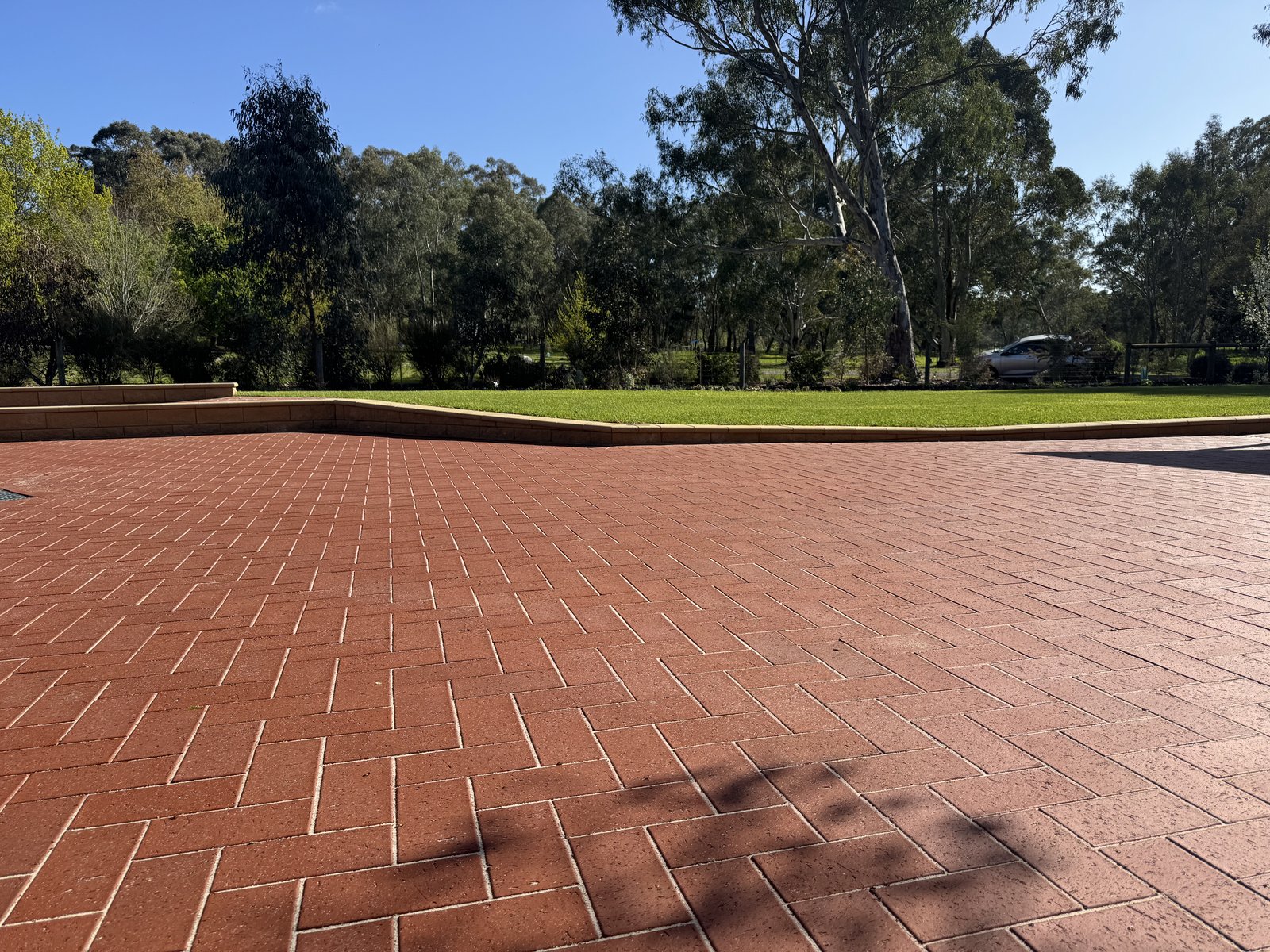
Clay brick is priced on the brick you choose. It's hard-wearing and it suits a driveway or a path. In Verdun we laid red brick in herringbone across a large area. Herringbone locks together under the weight of a car better than any other pattern, which is why it's the standard for driveways.
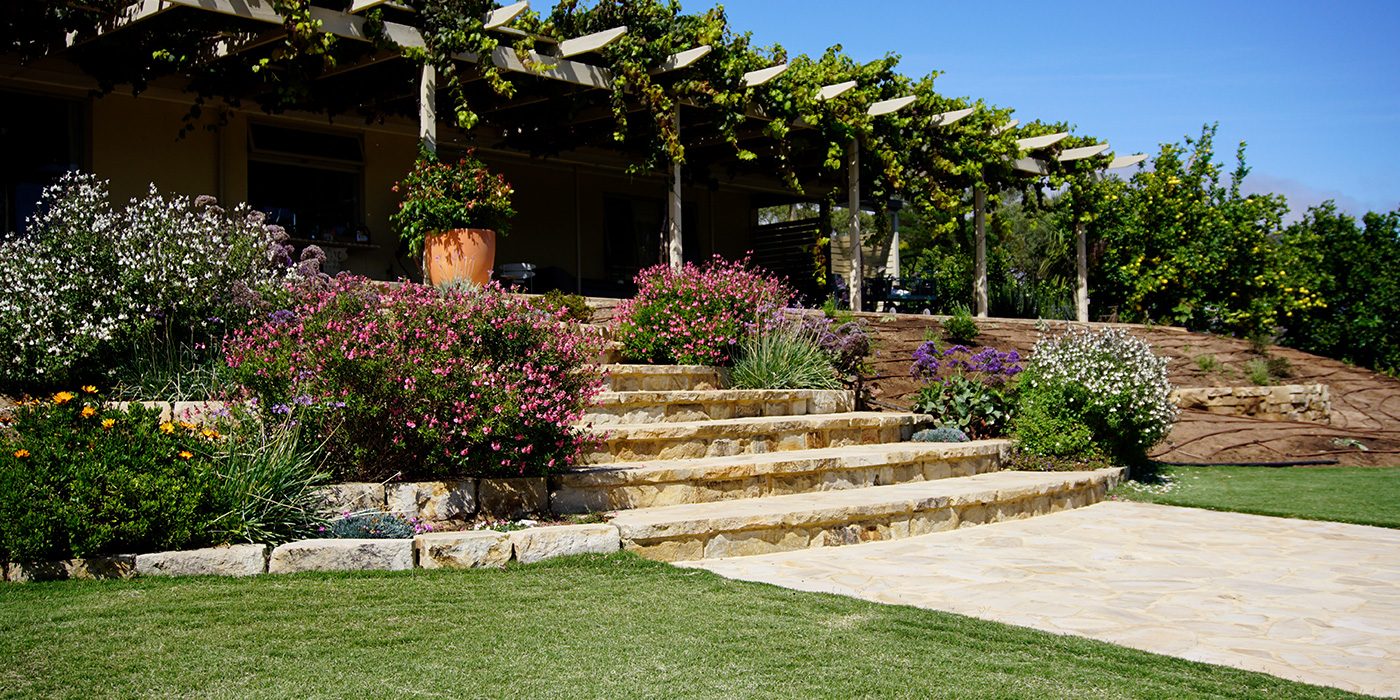
Natural stone costs the most. The stone is dearer, and it's often laid on a mortar bed and grouted rather than on sand, with every piece cut and set by hand. At a Willunga South winery, the Basket Range sandstone path around a Weeping Mulberry went down on a mortar base and was jointed with a colour-matched grout. Our sandstone versus concrete pavers guide compares the two on heat, wear and upkeep as well as price.
What Pushes the Price Up
- The soil. Reactive clay moves as it wets and dries, and the base has to allow for it. The Willunga South site sits on highly reactive Bay of Biscay soil, so every wet-laid sandstone area went down on 100mm of cement-treated rubble over geofabric. That limits movement and stops the mortar joints cracking, but it costs more than a plain rubble base.
- Old paving or concrete to remove. Lifting old pavers takes time, and anything that isn't reused is carted away, with the tip fees in the price. On the same Willunga South job, the old pavers under the verandah were lifted and new 400mm square pavers laid on a 75mm compacted rubble base.
- Driveways. A driveway carries the weight of cars, so it needs a deeper, more heavily compacted base than a path or patio, and a paver strong enough to take it.
- Access. If a machine can't get in, the digging and the base material move by hand or with smaller gear, and that takes longer.
- Sealing. A patio or entertaining area usually benefits from a sealer, because leaves, bird droppings, pool chlorine, barbecue fat and red wine can all stain. A driveway generally doesn't need it.
Don't Save Money on the Base
The base decides how long paving lasts, more than the paver does. Road base or crushed rock goes down in layers, and each layer is compacted before the next goes on. Compacting the whole depth in one pass leaves the bottom loose, however solid the top looks, and that's the paving that sinks and moves later.
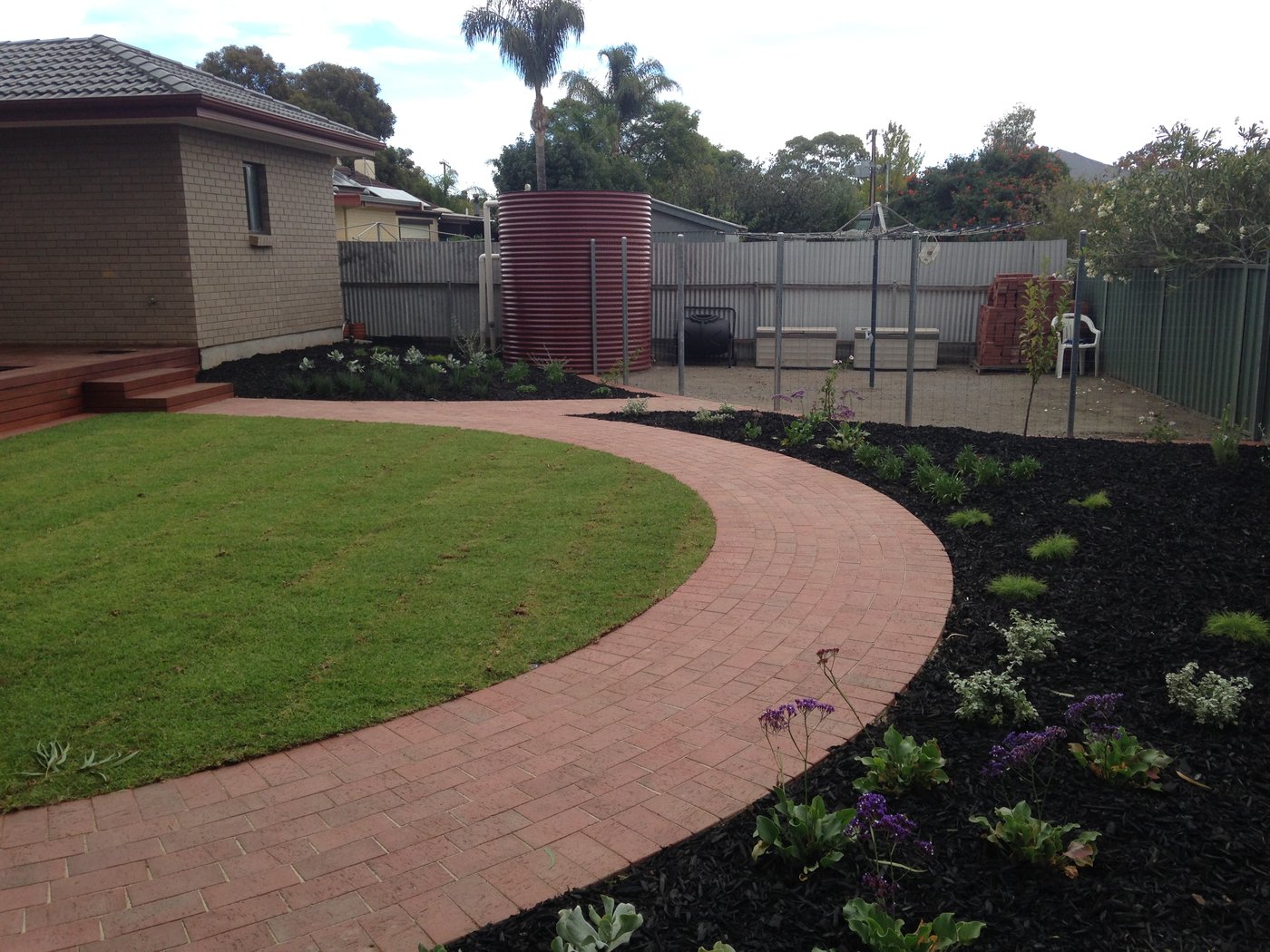
Edges matter too. On a garden makeover in Oaklands Park, a red brick path runs between the lawn and the garden beds on a compacted quarry rubble base. Concrete haunching along both sides stops the edge pavers creeping into the softer ground beside them. Leaving that out saves a little now and shows up later as spreading joints and a wandering edge.
Keeping the Cost Down
- Tell us your budget upfront. Knowing what you're comfortable spending lets us offer pavers and options that fit it, rather than a quote that doesn't.
- Choose concrete pavers over natural stone where the look matters less than the price.
- Seal the areas that need it, like the patio, and leave the driveway.
For how we lay paving, from the excavation to the jointing sand, see our paving page. If the paving is part of a bigger garden job, our landscaping cost guide has guide prices for lawn, decking and a small backyard build.
Paving Cost FAQ
How much does paving cost per square metre in Adelaide?
As a guide, basic concrete paving starts from about $170 per square metre and natural stone is about $430, including GST, based on an area of about 30 square metres. A smaller area costs more per square metre, because the setup and base work don't shrink with it.
How much does 30 square metres of paving cost?
As a guide, 30 square metres of basic paving starts from around $5,000, and the same area in natural stone runs to around $13,000, both including GST.
Why is natural stone paving dearer than concrete pavers?
The stone itself costs more, and it usually takes more work to lay. Natural stone is often laid on a mortar bed and grouted, rather than on sand, and each piece is cut and set by hand to get the joints right.
Does a driveway cost more to pave than a patio?
Usually, yes. A driveway carries the weight of cars, so it needs a deeper, more heavily compacted base than a path or patio, and a paver strong enough for vehicles, such as clay brick or a thick concrete paver.
How do I get an exact price for my paving?
Book a site consultation. We look at the area, the access, the soil and the paver you have in mind, then give you a written quote.
General information only. Every site is different, so get advice for yours before you start work. Prices are a guide only, as at the date published. See our disclaimer.
Got an area that needs paving? Tell us what you have in mind.
Book a Site Consultation