
The best Australian native plants for an Adelaide garden are the ones that have already grown well in gardens near yours. A native garden suits this climate because most of it copes with a long, dry summer once it's established. The trick is picking the right natives for the site, then giving them enough structure that the garden looks designed rather than left to go wild.
Low maintenance is the main reason people ask for one, and it's mostly true. Established natives need far less water than introduced plants and don't need regular feeding. They aren't zero maintenance, though. Most want a light prune after flowering to stay compact, and every new plant needs regular water through its first summer.
Australian Native Plants Proven on Our Own Jobs
We keep a record of the plants on every planting plan we have on file from our completed gardens. These are the natives that keep coming back, counted by how many of those gardens they went into:
- Hardenbergia 'Winter Wanderer' (Native Sarsaparilla), 14 gardens. A climber with purple winter flowers, planted from Port Noarlunga to Mount Barker. Good on a fence or a mesh screen.
- Leucophyta 'Silver Nugget' (Cushion Bush), 10 gardens. A small silver ball of a shrub that gives a bed contrast and structure all year.
- Acacia cognata 'Limelight', 9 gardens. A soft, lime-green feature shrub.
- Eremophila nivea (Silky Emu Bush), 9 gardens. Silver foliage and purple flowers.
- Westringia fruticosa (Coast Rosemary, also sold as Coastal Rosemary), 3 gardens including Port Noarlunga and Mitcham. A tough grey-green shrub that takes wind and salt, and clips into a neat low hedge or screen. Newer bred forms are worth a look too: Ozbreed's Westringias such as Grey Box (about 45cm high and wide) and Mundi (a low, spreading form) are bred to stay compact.
- Lomandra 'Seascape' and 'Little Pal', 8 gardens each. Tough grassy plants for edges and mass planting.
- Eremophila 'Kalbarri Carpet' and Anigozanthos 'Bush Gold' (dwarf yellow kangaroo paw), 6 gardens each. A groundcover and a splash of colour.
A plant list like this beats a generic "Adelaide natives" list because every one of these went into a real garden, from a real nursery, and grew.
Hills, Plains or Coast: Pick for the Site
Not every native suits every garden. Our own records show a clear split. Eremophila nivea turns up most on foothills and Hills jobs, such as Mount Barker, Verdun, Glenalta and Panorama, where it handles cold winters and dry summers. On exposed coastal sites the palette changes. Lomandra 'Seascape' has gone into gardens at Henley Beach, Somerton Park and Port Noarlunga, alongside saltbush (Rhagodia spinescens) at Henley Beach and Coast Rosemary at Port Noarlunga, where wind and salt spray knock back softer plants.
Soil matters as much as the suburb. Heavy clay that stays wet in winter will kill some natives that would thrive in sandy coastal soil, so it's worth getting the site looked at before the plant list is final.
A Real Example: Port Noarlunga
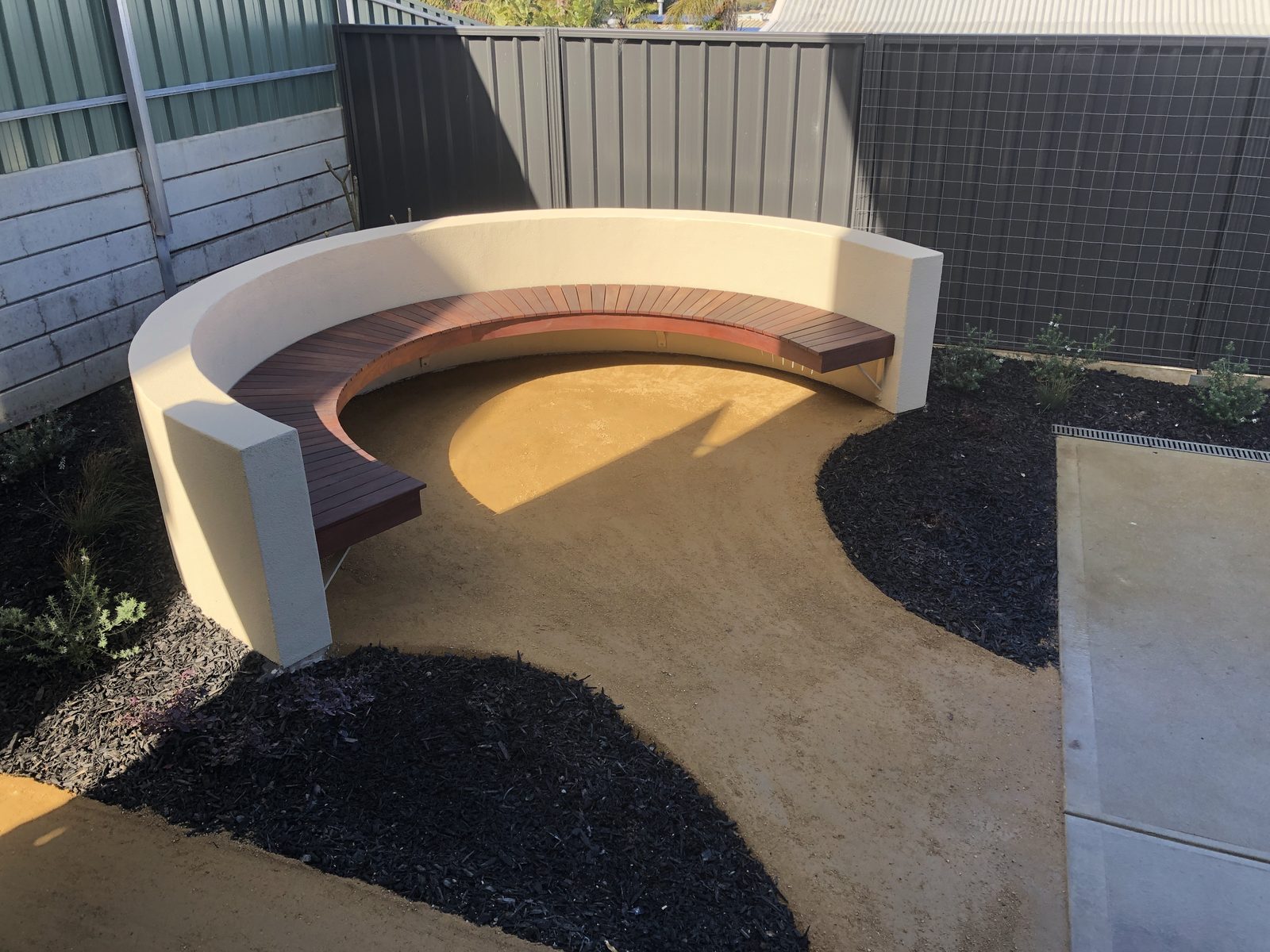
This back garden in Port Noarlunga, close to the coast, shows how the structure and the planting work together. The centrepiece is a curved rendered seat wall with hardwood bench seating around a firepit area, and the garden beds curve around it under a full layer of dark mulch. The photo was taken just after planting, so the plants are still small.
The planting plan mixes natives with a few hardy exotics. On the native side it has Coast Rosemary, Lavender Grevillea, Emu Bush, Hardenbergia 'Winter Wanderer', Leucophyta 'Silver Nugget' and Lomandra 'Seascape', all plants that handle wind and salt air. Because the edges, the seating and the mulch are in place from day one, the garden looks finished while the plants grow into it.
Native Garden Design: Structure First
The most common complaint about native gardens is that they look messy. The fix is structure, and it goes in before the plants do.
- Edges and walls. A defined edge, steel, brick or a retaining wall, tells the eye where the garden stops.
- Paths. A gravel or paved path through the beds keeps feet off the plants and gives the garden a shape.
- Drifts, not dots. Plant three, five or seven of the same thing together. Repeating a few reliable plants looks calmer than a collection of singles.
- Mulch. A 50-75mm layer between the plants holds moisture and hides bare soil. Our mulch guide covers which type to use.
- Water for the first summer. Drip line laid under the mulch before it goes down makes the first summer easy. See our irrigation page for how it works.
If you'd rather have the whole thing planned, our landscape design service draws the layout and planting plan around your site and how you use it. For the bigger picture of a full makeover, see our garden renovation guide.
Australian Native Plants FAQ
Is a native garden low maintenance?
Lower, not zero. Once established, most natives need far less water than introduced plants and no regular feeding. They still need a light prune after flowering to stay compact, and new plants need regular water through their first summer.
What are the best native plants for an Adelaide garden?
The ones already proven on real local gardens. On our own jobs the most reliable have been Hardenbergia 'Winter Wanderer', Leucophyta 'Silver Nugget', Acacia cognata 'Limelight', Eremophila nivea, the Lomandra range and kangaroo paw 'Bush Gold'.
Do native plants suit the Adelaide Hills?
Many do, but pick for the site. Eremophila nivea (Silky Emu Bush) turns up most on our foothills and Hills jobs, such as Mount Barker, Verdun, Glenalta and Panorama. Exposed coastal sites suit saltbush, Coast Rosemary and Lomandra 'Seascape' better.
When is the best time to plant a native garden in Adelaide?
Autumn is ideal, so roots establish over the wet winter before the first summer. Spring planting works too, as long as the plants are watered regularly through summer, ideally with drip irrigation.
How do you stop a native garden looking messy?
Give it structure. Edges, paths and retaining walls, plants grouped in drifts rather than dotted one of each, and a full layer of mulch between them all make a native garden look designed rather than overgrown.
General information only. Every site is different, so get advice for yours before you start work. Prices are a guide only, as at the date published. See our disclaimer.
Thinking about a native garden? Tell us about your site and we'll plan the plants and structure to suit it.
Book a Site Consultation