
Mulch is a layer spread over garden soil to protect it, and choosing the right one comes down to what the bed is actually for, not just what looks best on the day it goes down.
Adelaide's dry, hot summer is the reason mulch matters here more than in most climates. A proper mulch layer keeps soil moisture in and soil temperature down, which protects the root system of whatever's planted underneath through the months it's under the most stress. It also suppresses weeds and, over time with an organic mulch, adds nutrients back into the soil.
Spring is the time to do it. Lay mulch after the winter rain has soaked in and before the first hot spell, and it locks that moisture in for summer. Put it down over dry soil in January and it keeps the soil dry just as well.
Organic vs Non-Organic
Mulches split into two broad categories. Organic mulch (bark, wood chip, forest mulch) breaks down over time, feeding the soil with nutrients as it does. It's the right choice for garden beds with plants, shrubs, fruit trees or vegetables, since the soil underneath is actively growing something that benefits from that slow nutrient release.
Non-organic mulch (pebbles, stones, gravel) doesn't break down, so it keeps its look for years and won't get scattered by birds or dug up by pets as easily as a light bark mulch can. It suits pathways, areas laid alongside pavers, or anywhere the goal is a clean, stable finish rather than feeding the soil underneath.
Colour and size both affect how a mulch performs as much as how it looks. Smaller organic mulch breaks down faster and needs topping up more often; larger pebbles trap fewer leaves than small ones, so they stay tidier with less maintenance.
A Real Example: Craigburn Farm
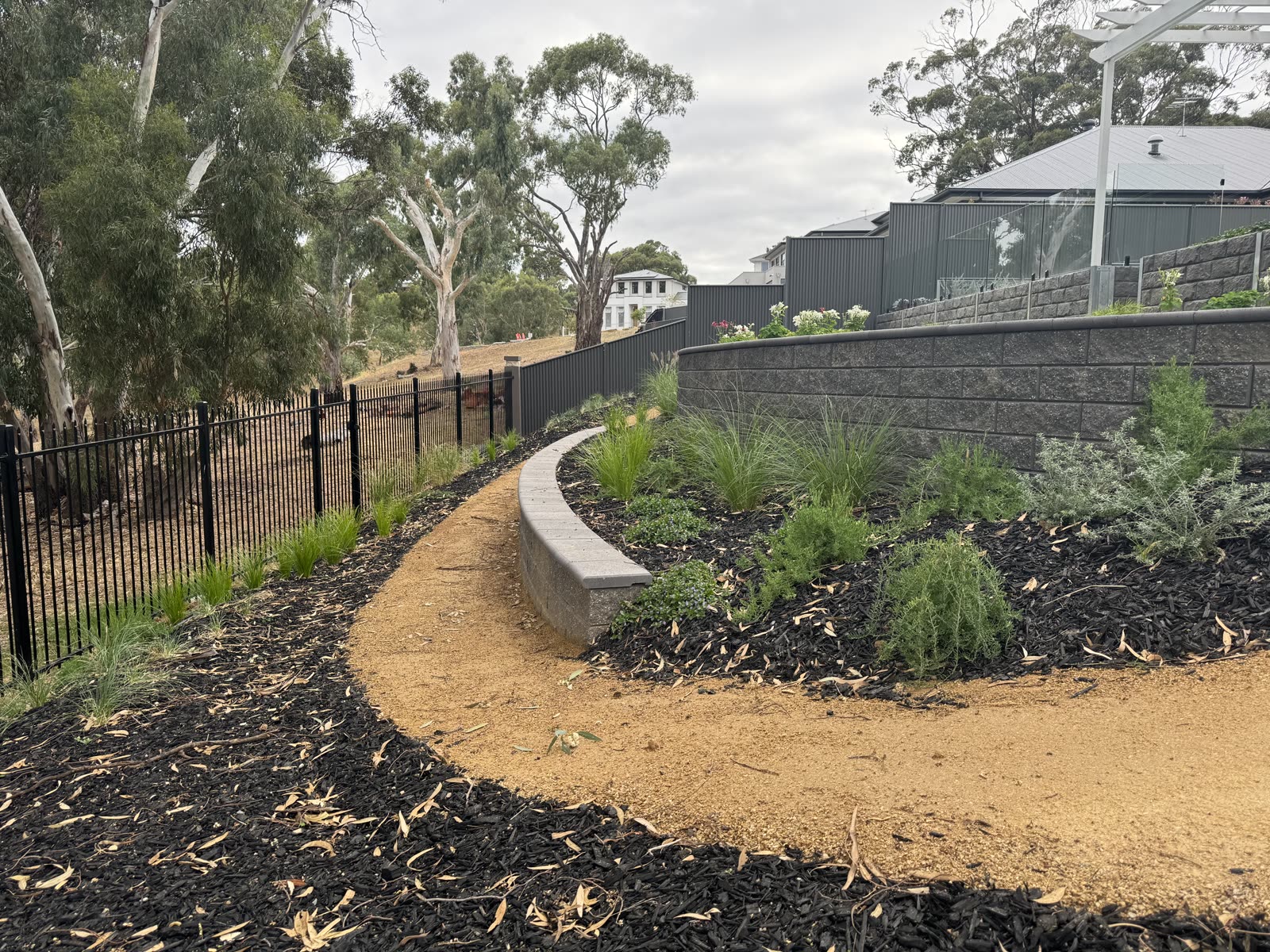
On this Craigburn Farm garden the beds are planted with native grasses and low shrubs, and a dark organic mulch covers every bit of soil between them. It does two jobs at once. It holds moisture in around young plants that haven't rooted deep yet, and the dark colour makes the green of the planting and the pale path stand out. The path itself is gravel, not mulch, because it gets walked on every day and bark would be kicked across it within a week. Beds get mulch, traffic areas get stone: that's the rule most gardens should follow.
The Hills edge of Adelaide asks a bit more of mulch than the plains do. Winters are cooler and wetter, so the mulch has to let rain through to the soil without staying waterlogged, then hold that moisture through a summer that's still hot. A coarse bark or wood chip does that better than a fine, compost-like mulch, which can mat down and shed water.
How Much Mulch Do You Need?
Mulch is sold by the cubic metre, and the sum is simple: area times depth. At 50mm deep, one cubic metre covers 20 square metres. At 75mm, it covers about 13. So a 40 square metre garden bed needs 2 cubic metres at 50mm, or 3 at 75mm. Order a little extra, because the first layer settles once it's been watered in.
How Thick to Lay It
Around 50-75mm is the usual depth for organic mulch on a garden bed. Too thin and it won't do its job properly, weeds still get through and moisture still escapes; too thick and it can actually restrict water and air reaching the soil, which defeats the purpose. Digging in a soil conditioner or organic compost first, then top-dressing with mulch, gets the best result on a garden that hasn't been fertilised or conditioned in years, which describes most gardens being renovated for the first time.
Where a garden bed has plants that need consistent watering, an automatic drip line irrigation system installed underneath the mulch, before it goes down, delivers water straight to the root zone rather than relying on it soaking through the mulch layer from above.
Best Mulch for Adelaide Gardens FAQ
What's the best mulch for an Adelaide garden?
It depends what the bed is for. Organic mulch (bark, wood chip) feeds the soil and suits garden beds with plants, shrubs or vegetables. Non-organic mulch (pebbles, stones) suits pathways and areas near pavers, since it doesn't break down or get kicked around as easily.
Does mulch actually help through an Adelaide summer?
Yes. A proper layer of mulch keeps the soil underneath noticeably cooler and slows moisture loss, which matters most exactly when Adelaide's summer heat is at its worst and plant roots are under the most stress.
How thick should mulch be laid?
Around 50-75mm is the usual depth for organic mulch on a garden bed. Too thin and it won't suppress weeds or hold moisture properly; too thick can restrict water and air getting to the soil.
When is the best time to mulch in Adelaide?
Spring, after the winter rain has soaked into the soil and before the summer heat arrives. Mulch holds in whatever moisture is already there, so laying it over wet soil gives plants the best start to summer.
How much mulch do I need?
Multiply the area by the depth. One cubic metre covers 20 square metres at 50mm deep, or about 13 square metres at 75mm.
How much does mulching cost?
Priced by the cubic metre delivered and spread, so it depends on the size of the area and how thick it's laid. Every job is quoted individually once the area is measured on site.
General information only. Every site is different, so get advice for yours before you start work. Prices are a guide only, as at the date published. See our disclaimer.
Need a garden bed mulched, or a full garden makeover including mulch and planting? Tell us what you have in mind.
Book a Site Consultation