
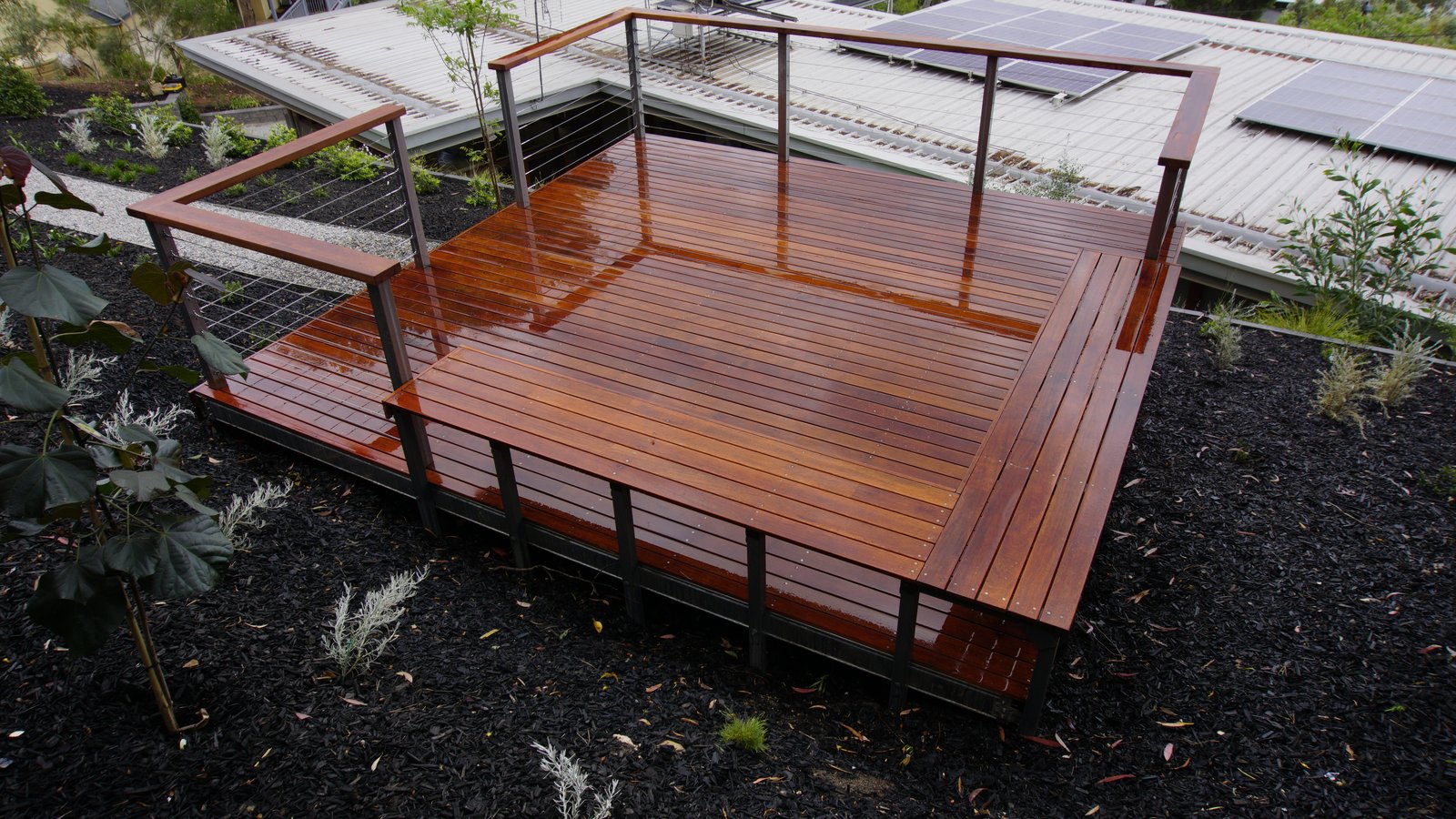
Merbau and composite are the two decking materials that come up most for Adelaide decks, and both are genuinely good choices — the right one depends on how much ongoing maintenance you're willing to do, budget, and how the deck actually gets used, not one being straightforwardly better than the other.
Cost
Merbau costs less upfront, in both material and typically installation. As a guide, 10 square metres of decking typically costs around $6,800 — see our full timber decks page for what that covers. Composite costs more to buy and install, but the maintenance cost gap narrows the calculation over a decade or more, since Merbau needs periodic oiling that composite simply doesn't.
Maintenance
This is the real trade-off. Merbau needs periodic oiling to keep its rich colour — left unoiled, it weathers to a silver-grey over a year or two, a look plenty of people actually like, but it's a genuine colour change, not decay. Composite needs nothing more than an occasional clean; no oiling, no sealing, no sanding back a greyed surface. If ongoing upkeep is the deciding factor, composite wins outright.
Heat Underfoot
Composite, especially in darker colours, tends to get noticeably hotter underfoot on a hot Adelaide summer day than timber of a similar shade. Lighter composite colours close the gap but don't fully eliminate it. This is worth real weight around a pool or anywhere bare feet are involved through summer, more than it usually gets credit for at the material-selection stage.
Durability
Both last decades on a properly built frame — see how a deck's frame, bearers and joists actually go together on our timber decks page, since the frame determines lifespan more than the decking material sitting on top of it. Where they differ: Merbau can develop minor surface checking (small splits along the grain) in extreme heat if left unoiled for long periods, and can splinter at board edges over many years of wear. Composite won't rot, splinter or check the way timber can, but its surface layer can show scuffs and wear over a long service life, particularly in high-traffic areas.
Appearance
Merbau is a genuine hardwood, so every board has its own natural grain and colour variation — part of what gives a timber deck its warmth, and visible in the deck pictured above. Composite is manufactured from a mix of wood fibre and plastic for a deliberately consistent colour and grain pattern board to board, which suits a cleaner, more uniform, contemporary look. Neither is more "correct" — it's a genuine style preference once the practical trade-offs above are weighed up.
Which One Should You Choose?
If you don't mind an annual or biennial oiling job and want the warmth and natural variation of real timber, Merbau is the lower-cost, well-proven choice — it's what's used on our own Glen Osmond deck build pictured on this page. If you want to never think about maintenance again and a consistent, uniform finish matters more to you than natural grain, composite's higher upfront cost buys you exactly that, with the trade-off of running hotter underfoot in direct summer sun.
Merbau vs Composite Decking FAQ
Is Merbau or composite decking cheaper?
Merbau is generally cheaper to install upfront. Composite costs more to buy and install, but needs virtually no ongoing maintenance spend (no oiling or sealing), so the total cost gap narrows over a decade or more of ownership.
Does Merbau or composite decking need more maintenance?
Merbau needs periodic oiling to keep its colour — left unoiled it silvers to grey over time, which is a look some people actually prefer. Composite needs an occasional clean but no oiling or sealing at all, which is its main practical advantage.
Does composite decking get hotter than timber?
Yes, generally — darker composite boards in particular can get noticeably hot underfoot on a hot Adelaide summer day, more so than timber of a similar colour. Lighter composite colours narrow the gap but don't fully close it.
Which lasts longer, Merbau or composite decking?
Both last decades on a properly built frame, which matters more than the decking material itself. Merbau can silver, surface-check slightly or splinter over time if left unmaintained; composite won't rot or splinter but its surface can show wear and scratches over many years of heavy use.
Which looks more natural, Merbau or composite decking?
Merbau, since it's a genuine timber with natural grain variation from board to board. Composite is manufactured for a consistent look and colour, which some people prefer for a cleaner, more uniform finish — it's a style preference more than one being objectively better.
See our full timber decks page for how a deck is actually built, or our real Glen Osmond deck build this page's photo comes from.
Not sure which decking material suits your project? Tell us what you have in mind and we'll help you choose.
Book a Site Consultation